Watering a garden by hand works, right up until you go away for a week, the weather turns hot, or you forget. Sprinklers left running, hoses watering the driveway and drippers blocked for months waste a surprising amount of water, and the garden can still end up dry.
A well set up irrigation system fixes most of that. It puts the right amount of water where it is needed, at the right time of day, without you having to think about it. Here is how to get there, and what to look for if you already have a system.
What a good system actually does
A good irrigation system is not just pipes and sprinklers. It is set up to suit the property:
- Lawns and garden beds on separate zones. Lawns, beds, pots and hedges all need different amounts of water. Putting them on the same zone means something gets too much or too little.
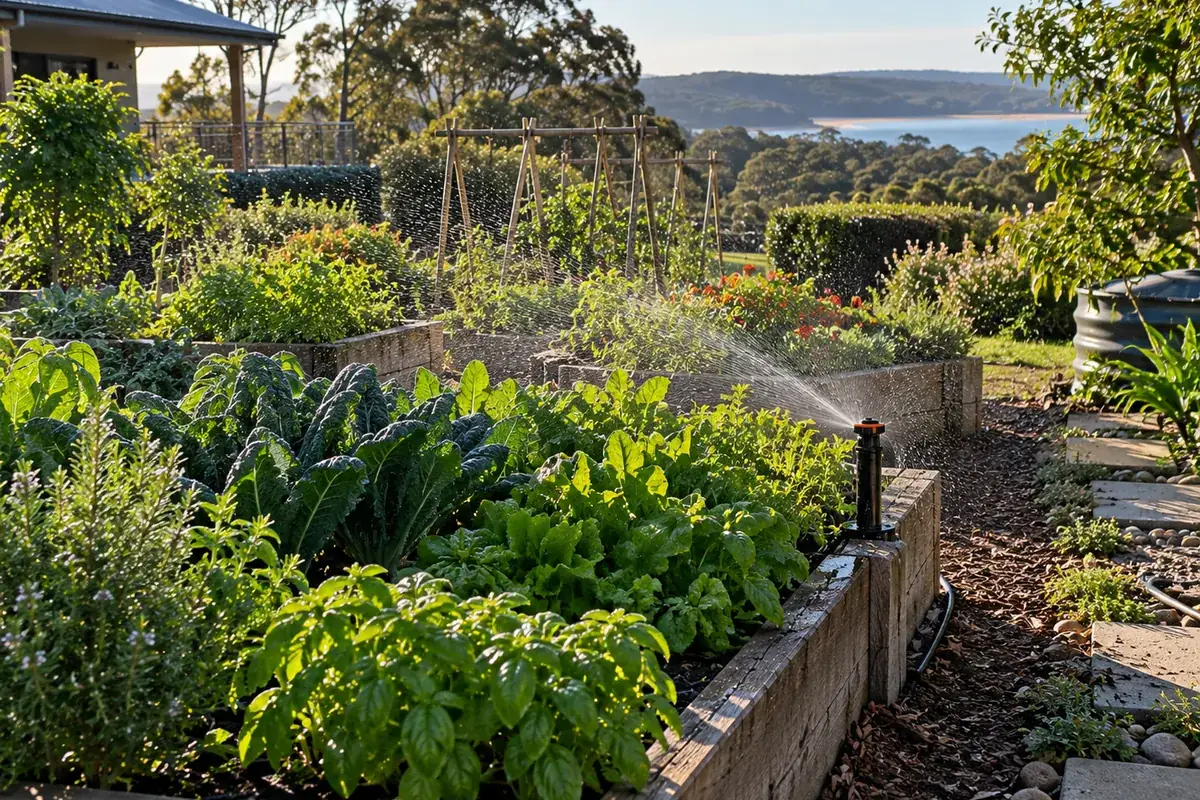
- The right outlet for the job. Sprays and rotors suit lawn areas. Drip lines and drippers suit garden beds and hedges, putting water at the roots with very little lost to wind and evaporation.
- A timer that runs early. Watering in the early morning means less evaporation and leaves time for foliage to dry, which helps in humid weather.
- Coverage without overspray. Water should land on the garden, not the path, the fence or the side of the house.
- Control that suits how you live. That might be a simple timer, or a smart controller and automated system that you can adjust from your phone and that responds to the weather. The right choice depends on the property, the garden layout and how hands-on you want to be.
Signs your system is wasting water
If you already have irrigation, it is worth a look before summer. Common problems we see:
- Sprinklers spraying paths, driveways or walls
- Puddles or soggy patches that never dry out
- Dry patches in the lawn or bed even though the system runs
- Hissing, bubbling or wet ground around a fitting, which usually means a leak
- Sprinkler heads that are broken, tilted or buried by grass and mulch
- The system running in the rain
- A timer that has not been changed since it was installed
A dripping tap alone can waste more than 2,000 litres a month, and a forgotten sprinkler can waste thousands of litres, according to Shoalhaven Water. A small leak in an irrigation line can run unnoticed for a long time.
A five-minute spring check
You do not need tools to do a basic check. Turn each zone on manually and walk it:
- Watch where every sprinkler and dripper is putting water.
- Straighten or clear any heads that are tilted or blocked.
- Look and listen for leaks along the lines and at the taps.
- Check the timer. Is it running at a sensible time of day, for a sensible length of time, for the season?
- Note anything that does not look right.
If the list at the end is longer than you expected, that is where we can help.
Adjusting through the year
The most common waste is a system that runs the same program all year. Gardens need less water in winter and through wet spells, and more during hot, dry weather. Adjusting the run times and days as the seasons change, and switching off or pausing the system when good rain has fallen, saves water and is better for plants. Overwatering can cause as many problems as underwatering, including root rot and fungal disease.
Mulch and soil do half the work
Irrigation works best alongside good garden basics. Mulch reduces evaporation and run-off, and healthy soil holds water instead of letting it run straight through. Shoalhaven Water also suggests choosing water-wise plants and installing a rainwater tank for garden use (Shoalhaven Water: water saving ideas).
If you would like your irrigation to draw from a rainwater tank, we can arrange a licensed plumber to make that connection where required, as we do not connect tanks ourselves. Our guide to mulching Shoalhaven gardens is a good place to start.
Local water rules
Check Shoalhaven Water’s current water restrictions before setting a new watering routine, as rules can change in dry periods. When restrictions do apply, Shoalhaven Water’s guidance is that sprinklers, drip irrigation and spray systems can be used if they are fixed to a timer (Shoalhaven Water: FAQs).
In Kiama and Gerringong, Sydney Water’s Water Wise Guidelines apply year round. Garden watering with drinking water is allowed before 10am and after 4pm, smart watering systems and drip irrigation can also be used between 10am and 4pm, and overspray or run-off onto hard surfaces is not allowed. A well-adjusted system makes those rules easy to live with.
Who irrigation suits
- New lawns and gardens, so watering is sorted from the start
- Holiday homes and rentals, where nobody is around to hold a hose
- Landlords and property managers who want low-effort watering
- Strata and commercial grounds with large lawn and garden areas
- Anyone who would rather not spend summer evenings watering
How Ground Control helps
Ground Control installs irrigation solutions for everything from small residential gardens to large commercial projects, including smart controllers and automated systems. We source and supply the equipment, and choose the system to suit your property, your garden layout and how you want it to run.
That includes installing new systems, checking existing systems for faults, leaks and dry or waterlogged spots, adjusting sprinklers, zones and timers to suit the season, and repairing or replacing worn parts. We test each zone and show you how it runs.
Where a job needs a regulated plumbing or electrical connection, such as connecting to the water supply or wiring in a controller, that part is completed by an appropriately licensed tradesperson.
Irrigation works best when it is planned with the rest of the garden, so we often install it alongside turf installation, garden renovations and landscaping work, then keep it running as part of regular lawn and garden care. See our irrigation systems page for more.
Get it sorted before the heat
Your time is precious, and standing in the garden with a hose every evening is not the best use of it. Request a quote for a new system or a check of your existing one, or call (02) 4411 1062. We work across Nowra and the Shoalhaven, plus Kiama and Gerringong, and look after strata and commercial grounds as well as homes.