Garden Mulching in the Shoalhaven Why It Matters and How to Do It Properly
By Ground Control Lawn Garden and Landscaping | 23 October 2026
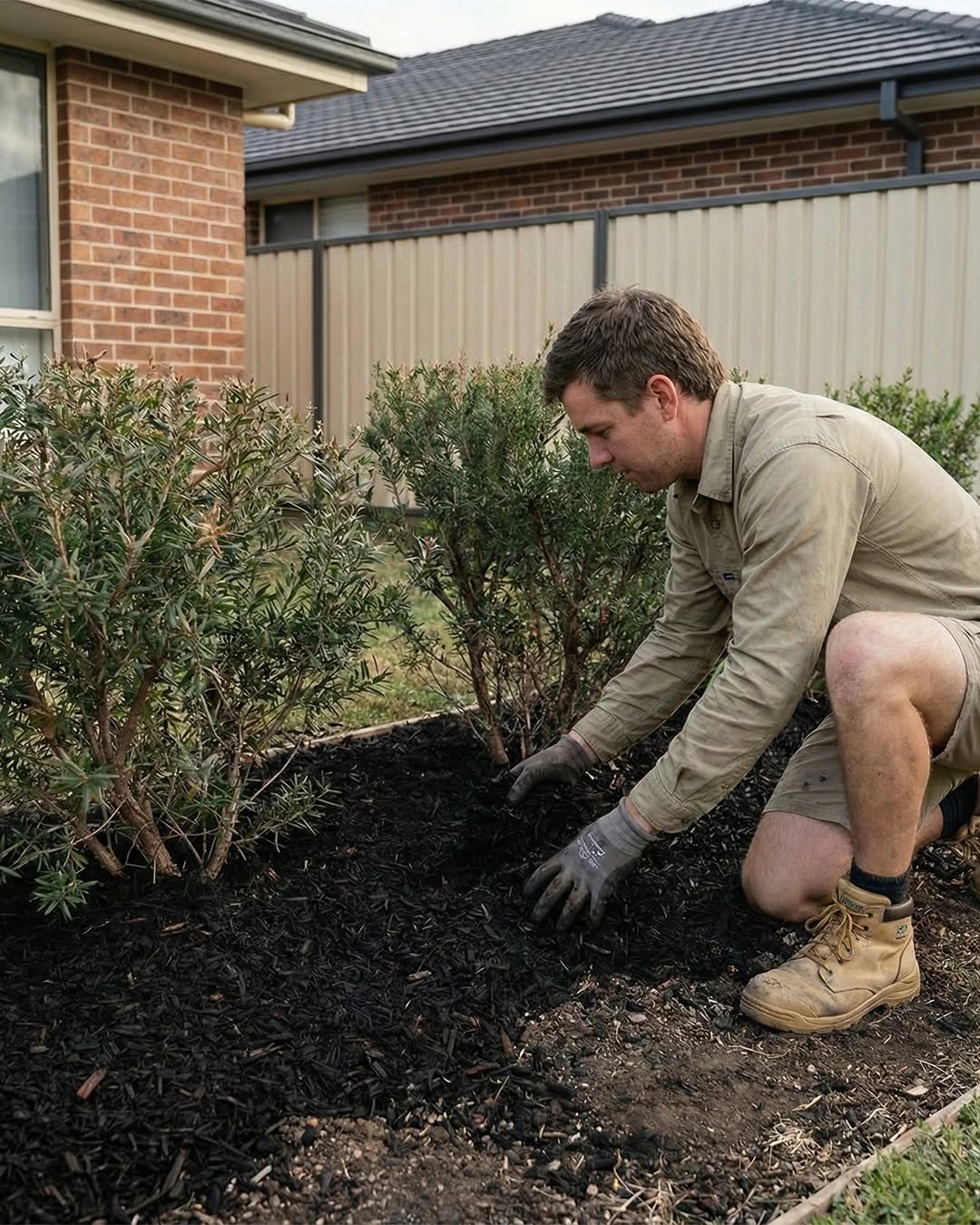
Fresh mulch can transform a tired garden bed in a single day. The colour looks richer, the edges appear sharper and the whole property feels better maintained. That visual improvement is only one reason to mulch.
Mulch is a protective layer over soil. At a suitable depth, it slows moisture loss and moderates soil temperature. It limits light reaching weed seeds and protects the surface from sun and heavy rain. Organic mulch breaks down gradually and adds organic matter.
Those benefits make garden mulching valuable in the Shoalhaven.
By late spring, warmer days place more demand on plants and irrigation.
Coastal winds can dry exposed beds.
Moreover, local rain may arrive in bursts rather than exactly when a garden needs it.
Mulch cannot repair blocked drainage, remove established weeds, loosen severe compaction or fix poor irrigation coverage. Fresh material may hide those problems while they continue underneath.
Additionally, the best result comes from treating mulching as part of garden care.
Check the soil, remove weeds, and inspect the plants and irrigation.
Choose right material, work out the amount, and apply it at a sensible depth.
This guide explains how to do that across Nowra and the wider Shoalhaven on the NSW South Coast.
Why mulch matters in the Shoalhaven
Shoalhaven gardens cover a large and varied area. Additionally, a sheltered garden in Nowra can behave differently from an exposed coastal property. Even within one block, a north-facing bed may dry much faster than a shaded bed beside the house.
The Bureau of Meteorology records average maximum temperatures at the Nowra RAN Air Station rising through spring and into summer. Rain also varies from month to month and year to year. A monthly average does not tell you whether your garden received useful soaking rain this week. Plants respond to the moisture available around their roots, not the rainfall total shown for the broader district.
Bare soil is exposed to sunlight, drying wind and raindrop impact. It can heat quickly, lose moisture and form a crust. On a slope, runoff may also carry fine soil away.
Mulch creates a buffer between the soil and those conditions. It does not make a garden drought-proof and it does not remove the need to water. It helps the soil retain useful moisture for longer and reduces some of the sharp changes that place plants under stress.
The right mulch for a flat ornamental bed may be wrong for a windy slope or a strip beside a bush-fire-prone dwelling. Product choice, placement and maintenance all matter.
What mulch does in a garden bed
Slows moisture loss from the soil
Water leaves a garden bed in several ways. Plant roots take it up, water can drain below the root zone and moisture evaporates from the soil surface. Mulch mainly helps with that last pathway by shading the surface and reducing its exposure to moving air.
This can extend the useful time between watering, although the result depends on the soil, weather, roots, mulch type and depth. Coarse organic mulch usually leaves spaces for rain and irrigation to move through; old or matted material may not.
Mulch works best when moisture is already available below it. Water dry soil before installation, then confirm that later irrigation penetrates to the root zone.
Moderates soil temperature
Uncovered soil can warm quickly in direct sun and cool rapidly after conditions change. A mulch layer insulates the surface, reducing the speed and size of those temperature swings. More stable root-zone conditions can be helpful for established shrubs, young plants and shallow feeder roots near the surface.
The effect varies with the material. Dark stone can absorb and radiate heat in sun, while coarse organic material usually provides more buffering. The plant, aspect and purpose of the bed should guide the choice.
Reduces weed germination and growth
Many weed seeds need light to germinate. A sufficient mulch layer blocks light and creates a physical barrier, so fewer seedlings establish and small weeds are easier to remove.
Mulch does not kill every weed. Perennial weeds can return from roots or underground stems, and new seed will keep arriving. Remove existing weeds first and pull new seedlings while they are small.
Protects the soil surface
Heavy rain can dislodge fine soil, seal the surface and splash nearby leaves, walls and paths. Mulch intercepts some impact and can slow surface movement, although light material may wash away in concentrated runoff.
If water cuts channels through a bed, ponds beside the house or carries soil onto a path, correct the drainage before applying mulch.
Supports gradual soil improvement
Organic mulches such as wood chip, bark and leaf material break down over time. The resulting organic matter can improve the upper soil layer, although the rate depends on the product and site.
Organic mulch needs topping up because it decomposes. Compost and mulch are not identical: compost is a fine soil amendment, while mulch is a surface cover. Compost may be useful beneath a coarser mulch but does not create the same durable weed barrier on its own.
Gives garden beds a consistent finish
A uniform surface reduces the visual clutter of bare soil and irrigation lines. It also defines the edges and improves presentation immediately.
Colour is useful, but particle size, source, fire context, slope and plant needs are more important.
Choosing mulch for a Shoalhaven garden
There is no single best mulch for every Shoalhaven property. The most suitable option is the one that matches the plants, soil, exposure, maintenance expectations and location of the bed.
| Mulch type | Often suits | Main advantages | Points to check |
| Coarse arborist or wood chip | Established native and mixed ornamental beds | Good surface cover, spaces for water movement and gradual breakdown | Source, consistency, pieces near paths and how it will weather |
| Pine bark or graded bark | Formal beds, entries and ornamental planting | Consistent appearance and a range of particle sizes | Light pieces may move on slopes or in strong runoff |
| Leaf mulch or forest-style mulch | Informal gardens and beds where soil improvement is a priority | Breaks down readily and suits a natural finish | Fine material can mat, move or need more frequent renewal |
| Straw or sugar cane mulch | Vegetable gardens and productive beds | Easy to spread around seasonal crops and adds organic material | Can move in wind and usually breaks down faster |
| Gravel or decorative stone | Selected architectural, drainage or fire-conscious areas | Long-lasting finish and low organic fuel load | Heat, weight, weed build-up, removal difficulty and plant suitability |
Coarse wood chip and arborvitae mulch
Coarse wood mulch suits many established native and ornamental beds. Mixed chip sizes knit together while leaving spaces for water, and the lower layer gradually decomposes.
The load should be free of rubbish and obvious contaminants. Fresh arborvitae mulch varies in colour and texture and may settle noticeably; a graded product gives a more predictable finish.
Surface-applied wood is different from fresh wood mixed through soil. Incorporating undecomposed material through a planting zone can temporarily tie up available nitrogen. Keep wood chips on top unless they are part of a planned soil-building process.
Bark mulch
Bark gives a neat, consistent finish. Chunky grades can last well, while finer grades look smoother. Large pieces may shift on slopes or float in runoff, so check drainage first.
Most organic products fade and weather. Check how the bark behaves when wet, how quickly it settles and how easy it will be to maintain.
Leaf based and forest style mulch
Leaf-based mulch suits informal beds and breaks down faster than large bark. That can benefit the soil, but the visible layer may need attention sooner.
Fine material can form a mat after repeated wetting and drying. If water runs across the surface, lightly rake the layer and test the soil below rather than adding more.
Straw and sugar cane mulch
Straw-like mulch suits vegetables, herbs and productive beds. It is easy to move for planting and returns organic material as crops turn over. In exposed sites, water it after installation to reduce movement.
These products break down faster than coarse wood mulch. Check the layer between crops and top it up according to condition.
Gravel and decorative stone
Stone can suit modern beds, drainage strips and places where organic material is undesirable. It does not break down, but dust and leaves collect between pieces and support weeds. It is also difficult to remove if the design changes.
Dark stone in strong sun may increase heat around low plants and walls. In bushfire-conscious locations, non-combustible material may be more appropriate near a structure, but current NSW Rural Fire Service guidance and the complete property design should inform that choice.
Prepare the bed before you spread mulch
Good preparation determines whether a new mulch layer solves problems or hides them. The following process is suitable for most established garden beds, with adjustments for the plants and site.
Identify and remove weeds
Remove weeds before they seed and extract as much root as practical. Species with bulbs, runners or rhizomes need specific control because mulch alone will not stop them.
If herbicide is considered, identify the weed, follow the label and protect nearby plants, people and pets. Mechanical removal is often enough for light infestations.
Inspect the soil
Pull back old material and check whether soil is moist or dry, loose or compacted, and whether water soaks in or sits on top. A small soil plug tells you more than surface colour.
Compacted soil may need careful loosening around existing roots. Amendments should respond to an observed need. Do not add fertiliser, lime, gypsum or wetting agents simply because the bed is being mulched.
Check drainage and levels
Keep the finished level below path edges where needed and do not direct water toward the building. Correct low points, erosion and troublesome downpipe discharge first.
Keep inspection zones, vents, weep holes, drains, valves and utility points visible. Mulch against a wall can hide moisture and obstruct inspection.
Inspect irrigation
Run each irrigation zone before mulching. Watch the whole cycle and identify blocked emitters, split pipes, overspray and dry pockets. Dripline should deliver water across the active root zone rather than only beside a stem. As plants grow, the root area expands and irrigation placement may need to change.
Repair faults before spreading mulch. Dripline may sit beneath the mulch to reduce evaporation, but it should remain easy to locate and maintain.
Define edges and plant clearances
Clean edges help contain loose material and create the finished appearance most people expect. At the same time, create clear space around trunks, stems and plant crowns. Mulch should cover the root zone without being piled against living tissue.
Keep the tree root flare visible. A mound around a trunk can hold moisture against bark and conceal decay. Form a broad, level layer with a gap at the trunk.
How deep should mulch be
For many coarse organic mulches, a finished layer of about 50 to 75 millimeters is a useful general starting point. The correct depth depends on particle size, existing material, soil drainage, plant type and exposure. Coarser products can usually sit deeper than very fine products because they retain more air space.
Measure the total layer, including the old material. If 40 millimeters remains, adding another 75 millimeters creates excessive build-up. Rake the old layer and top up only what is needed.
A layer that is too thin may expose soil after it settles, allow more light to reach weed seeds and lose moisture quickly. Scattering a few bags over a large bed often gives a temporary colour change without creating a useful protective layer.
Too much mulch can limit gas exchange, keep crowns damp, bury small plants and make soil moisture hard to judge. Fine material is particularly likely to compact when applied too deeply.
Keep the material shallower around low groundcovers and small seedlings. Maintain a clear ring around trunks and stems, and never bury the crown of a plant. At paths and lawn edges, allow for settling and movement so the mulch does not continually spill onto traffic areas.
Check the depth again after the product settles. Measure several parts of the bed rather than judging one pile by eye.
How much mulch do you need
Mulch is normally ordered by volume in cubic meters. Calculate the garden area in square meters, choose the required depth in meters and multiply the two numbers.
Garden area in square meters multiplied by mulch depth in meters equals cubic meters of mulch
For example, a 20 square meter bed covered to a finished depth of 50 millimeters needs approximately 1 cubic meter:
20 multiplied by 0.05 equals 1 cubic meter
A 30 square meter bed covered to 75 millimeters needs approximately 2.25 cubic meters:
30 multiplied by 0.075 equals 2.25 cubic meters
For irregular beds, divide the area into simple rectangles, triangles or circles, calculate each part and add the totals. Subtract large paved areas or dense features that will not receive mulch. Small gaps between plants still need coverage, so do not subtract the footprint of every shrub.
Allow sensibly for uneven ground and settlement. Bulk supply often suits larger beds, while bags may be easier for a small or inaccessible area. Compare actual volume, access and handling rather than unit price alone.
Before ordering, confirm where a truck can unload without damaging turf or covering drains and service points.
How mulch and irrigation work together
Mulch can improve water efficiency, but only when water reaches the soil. The top of an organic mulch layer may look dry while the root zone remains moist, or it may look damp after a brief shower while the soil below is still dry. Check beneath the surface before changing the irrigation schedule.
Drip irrigation beneath mulch applies water close to the soil, but emitters still need inspection. Mark valve locations and keep joiners accessible.
Spray irrigation must distribute water across the planted area without being blocked by shrubs or borders. Fresh mulch can change how low sprays travel. Run the zone after installation and look for dry shadows. If the water only wets the mulch surface, a longer run may not be the only answer; pressure, nozzle choice, spacing or a compacted layer may be responsible.
Watering should respond to season, soil and plant demand. New plants may need more regular attention while establishing, sandy soil drains faster than heavier soil, and exposed beds dry faster than sheltered ones.
Use a trowel or finger test at several points, including the driest edge of the bed. A moisture check five to ten centimeters below the surface is more useful than a glance from the path. Adjust irrigation based on what you find and follow current Shoalhaven Water requirements.
The best time to mulch in the Shoalhaven is spring or autumn. Additionally, this schedule supports effective mulching.
Mulch can be applied throughout the year when the bed is properly prepared.
For many Shoalhaven gardens, spring is a practical time.
Additionally, weeds can be removed, irrigation can be tested, and the soil can be protected before summer’s peak.
Thus, timing should follow the condition of the garden rather than the calendar alone. Additionally, do not seal a badly waterlogged bed beneath a dense layer. Additionally, fix drainage and allow the soil to reach a workable condition first. Likewise, do not wait for a heatwave to discover that the bed is bone dry and the irrigation is blocked.
Autumn can also be useful after summer growth is pruned and weeds are controlled. In vegetable beds, timing usually follows planting and crop rotation.
Top up when the layer has thinned, not automatically every year. Check several places and assess how much usable material remains.
Common mulching mistakes
Covering weeds instead of removing them
Fresh mulch may hide weeds for a short time, but established species often grow through it. The roots remain in place and become harder to locate. Remove or treat weeds first, then monitor the bed for new growth.
Building mulch volcanoes around trees
Piling material against a trunk creates a damp collar and hides the natural root flare. Spread mulch broadly over the root zone and pull it back from the trunk. More height at the tree does not mean more protection.
Adding new mulch without checking the old layer
Repeated top-ups can create a deep profile containing fresh mulch, decomposed material and trapped fines. Measure first. Rake and assess the old layer, then add only enough to restore the target depth.
Assuming weed mat removes all maintenance
Landscape fabric can be useful in selected applications, especially beneath some inorganic surfaces, but it does not permanently prevent weeds. Organic matter accumulates on top and supports new seedlings. Fabric can also complicate planting, soil improvement and removal later. In many planted beds, a well-prepared soil surface and suitable organic mulch are easier to manage.
Treating mulch as a substitute for watering
Mulch slows loss; it does not create moisture. New plants, shallow-rooted plants and beds under eaves still need appropriate watering. Check the root zone, especially after light rain that may not have penetrated the layer.
Maintaining mulch after installation
A mulched garden still needs observation. Walk the beds or inspect from the edges every few weeks during active growth. Pull small weeds before they seed, remove rubbish and rake material back from paths or lawn.
If the surface forms a crust or mat, lightly loosen the upper layer without damaging feeder roots. Where mulch washes downhill, address the water flow before replacing it.
Watch the plants as well as the mulch. Yellowing, wilt, stem damage or poor growth may indicate irrigation, drainage, nutrient, pest or disease problems. Adding another layer will not diagnose those symptoms. Pull the mulch back, inspect the soil and plant base, and identify the cause.
When organic mulch falls below the useful depth, top it up. Fine leaf material usually needs attention sooner than large bark.
Keep edges clean, but avoid using a line trimmer so close that it damages tree bark or plant stems. If lawn runners invade the bed, remove them early and review the edge design. A crisp boundary saves ongoing labor and helps keep mulch out of the mower.
Mulching near homes and bushland
Many Shoalhaven properties sit close to bushland or are mapped as bush-fire-prone. Organic mulch is combustible, particularly when it is dry or allowed to accumulate with leaves and twigs. NSW Rural Fire Service guidance should be considered when choosing materials and locating garden beds near a dwelling.
A non-combustible surface such as gravel or decorative stone may be more suitable in selected areas close to the house. The right arrangement depends on the building, slope, vegetation and assessed bushfire risk. General gardening advice cannot replace a Bush Fire Attack Level assessment, an approved landscape plan or current RFS requirements.
Routine maintenance is part of risk reduction. Remove accumulated fine fuels, keep garden material away from vulnerable building elements and do not let mulch cover vents, weep holes or inspection zones. If the property is bush-fire-prone, confirm the current recommendations for that address before installing a broad organic mulch layer near structures.
Termite inspection is another reason to maintain visible building clearances. Mulch should not bridge damp-proof courses, cover slab edges or obstruct access used for inspection. Requirements vary with construction, so follow the advice of a licensed pest professional or building specialist when the correct clearance is uncertain.
When a simple top up is not enough
Some beds need more than weeding and a fresh layer. Persistent wet patches may point to drainage failure or leaking irrigation. Repeatedly dry areas may have hydrophobic soil, compacted fill, root competition or poor water coverage. Plants that decline despite regular watering may be sitting too deep, suffering root damage or growing in unsuitable conditions.
Old beds can contain several generations of mulch and weed fabric. Adding more raises the surface around trunks and walls, so accumulated material may need removal before the bed is rebuilt.
Professional assessment is useful when the cause is unclear or the area is large. Ground Control can inspect the plants, soil, levels, drainage, irrigation and existing mulch together. That allows the work to address the underlying condition and gives the new material a better chance of performing as intended.
Mulching checklist for Shoalhaven gardens
Before ordering or spreading mulch, work through this checklist:
Identify the plants, soil condition, aspect and exposure of the bed.
Remove weeds and deal with persistent roots or runners.
Check soil moisture, compaction and drainage below the surface.
Run the irrigation zone and repair faults.
Keep trunks, stems, crowns, walls, weep holes and inspection areas clear.
Choose a material that suits the garden, slope, maintenance plan and bushfire context.
Measure the bed and calculate volume from area multiplied by depth.
Count the usable existing layer before ordering a top-up.
Apply an even depth, generally around 50 to 75 millimeters for many coarse organic products.
Water as needed and confirm that moisture reaches the soil.
Recheck depth, movement and irrigation after the mulch settles.
Questions about garden mulching in the Shoalhaven
What is the best mulch for Shoalhaven gardens
The best mulch depends on the bed. Wood chip or bark often suits established gardens, straw-like products suit productive beds, and stone may suit selected architectural or fire-conscious areas. Soil, slope, wind, irrigation and proximity to the house should guide the decision.
How deep should garden mulch be
About 50 to 75 millimeters is a practical starting range for many coarse organic mulches. Fine products usually need a shallower layer, and small plants need space around their crowns. Measure the old layer before adding new material so the total does not become excessive.
Should weed mat go under mulch
Fabric can help beneath some gravel areas, but it does not stop weeds forever because soil collects on top. In planted beds, it can complicate planting, irrigation repairs and soil improvement. Good preparation and adequate organic mulch are often simpler.
How often should mulch be replaced
Inspect it rather than relying on a fixed yearly schedule. Organic mulch settles and decomposes at different rates. Rake the surface, measure the remaining layer and top up only what has been lost. Remove and replace material if it has become contaminated, badly matted or unsuitable for the bed.
Does mulch mean a garden needs less water
Mulch can reduce evaporation from the soil surface, so moisture may last longer. Actual watering still depends on the soil, plants, season and irrigation system. Check several centimeters below the mulch and adjust watering from that evidence.
How do I calculate mulch for an irregular garden bed
Break the bed into simple shapes and calculate each area. Add the areas, multiply by the chosen depth in meters and order that volume in cubic meters. For example, 20 square meters at 50 millimeters deep requires about 1 cubic meter.
What is the best time to mulch in the Shoalhaven
Spring is often practical because it allows preparation before hotter weather, but mulch can be applied whenever soil, weeds, drainage and irrigation are ready. Autumn is also useful in many gardens. Do not cover saturated soil or an unresolved drainage problem.
Garden mulching services across the Shoalhaven
Mulch gives a garden its best result when the work underneath is sound. The bed needs clean edges, controlled weeds, suitable soil moisture, functioning irrigation and clear space around plants and buildings. Once those details are right, the new surface can improve presentation while protecting the soil through warmer conditions.
Ground Control provides garden maintenance and mulching across Nowra, Bomaderry and surrounding Shoalhaven communities. We can assess the bed, prepare the surface, calculate the volume, select suitable mulch and install it evenly. We can also identify drainage, soil or irrigation problems before they disappear beneath a fresh layer.
If your garden beds are thin, weedy, dry or overdue for attention, contact Ground Control to arrange an assessment. A well-planned mulch installation is a practical step toward cleaner beds, more stable soil conditions and a garden that is easier to manage through the Shoalhaven summer.