Buffalo vs Couch vs Kikuyu vs Zoysia: Which Lawn Is Best for the Shoalhaven
The best lawn type for a Shoalhaven property is the one that suits that property. Sunlight, soil, drainage, irrigation, foot traffic and the available mowing time matter more than the variety with the most impressive label.
Buffalo, Couch, Kikuyu and Zoysia are warm-season grasses commonly used in Australian gardens. Each can produce an attractive lawn, but they do not grow, show stress or recover in the same way. A lawn that thrives in an open Nowra yard may struggle beside a shaded home nearby.
This guide compares Buffalo vs Couch vs Kikuyu vs Zoysia for homes across Nowra, the Shoalhaven and the wider NSW South Coast. It covers summer performance, maintenance and suitable sites. These are general tendencies; cultivar, soil, roots and care can change the result.
Lawn type comparison at a glance
| Lawn type | Leaf and appearance | Light preference | Wear and recovery | Maintenance and fit |
| Buffalo | Broad, soft-looking leaf and dense coverage | Full sun to partial shade, depending on cultivar | Handles normal family use but worn areas may repair more slowly | Moderate mowing and edging; often suits yards with shade and mixed conditions |
| Couch | Fine leaf and a neat, close-cut finish | Strong sunlight | Spreads through runners and recovers well while actively growing | Regular mowing and edging; suits sunny lawns where a fine finish is the priority |
| Kikuyu | Medium to coarse leaf with vigorous growth | Strong sunlight | Usually recovers quickly from wear during warm active growth | Frequent mowing, edging and thatch control; suits busy, sunny yards |
| Zoysia | Fine to medium, dense and often stiff leaf | Sun to partial shade, depending on cultivar | Dense once established, but damaged areas can be slow to fill | Slower growing; suits owners willing to trade fast repair for less frequent mowing |
There is no automatic winner. Buffalo is often the first variety considered for shade. Couch suits strong sun and a finer cut. Kikuyu is valued for vigorous recovery. Zoysia appeals to people seeking slower growth and lower routine maintenance. The right decision comes from matching those traits to the site.
Why lawn selection matters in the Shoalhaven
Shoalhaven lawns can experience strong summer sun, drying winds, heavy rain and short periods when soil dries quickly. Conditions also change across one block. An open yard may receive long hours of sun, while a side passage stays shaded and damp. Turf near a driveway may sit over shallow, compacted soil while the rear yard has deeper topsoil.
Rainfall does not show whether turf has usable moisture. Water can run off compacted ground, collect in low areas or miss turf because of poor sprinkler coverage. Free-draining soil may dry rapidly, while heavier soil can remain wet and short of oxygen. Tree roots and buried building debris add more variation.
Two neighbours can therefore install the same turf and get different results. The growing environment controls how well each species uses its natural strengths.
Before choosing turf, observe the area through the day. Note where people and pets run, where water sits after rain and how much maintenance you can manage during peak growth.
How to identify the lawn you already have
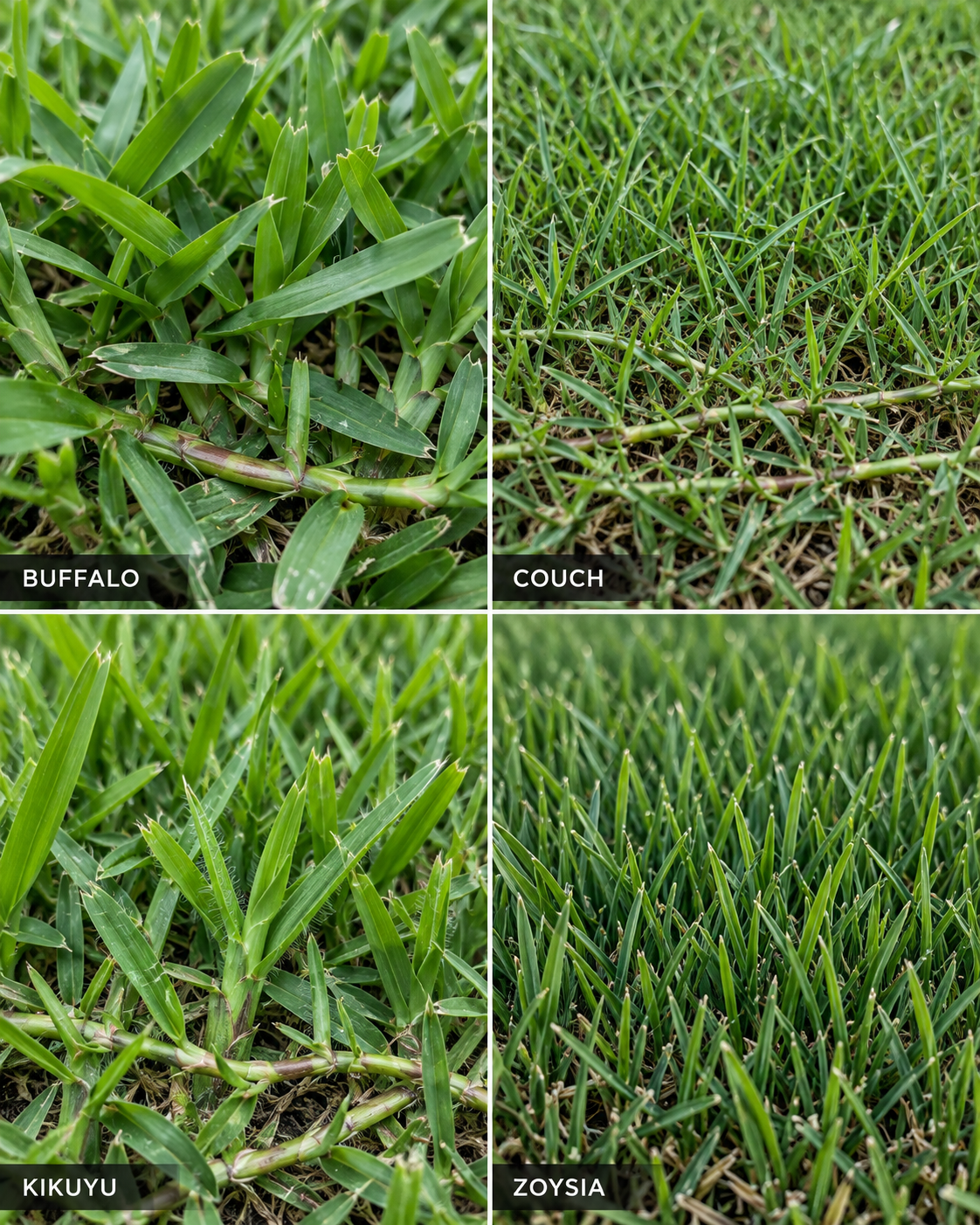
Correct identification matters before changing mowing, fertilising or weed-control products. Start with leaf width, blade tip and runners.
Buffalo generally has the broadest leaf and thick above-ground runners. Couch has a finer leaf and forms a close mat with slender runners. Kikuyu has a medium-width, bright green leaf and vigorous runners. Zoysia usually sits between Couch and Buffalo in texture and forms a tight surface.
Do not rely on colour because nutrition, watering and season can change it. A close-up of the leaf, tip and runner is more useful than a wide yard photo. If uncertain, have the lawn identified before using a selective herbicide, as product suitability differs between grasses and cultivars.
Buffalo lawn for shade and mixed residential conditions
Buffalo grass is recognised by its broad leaf and thick above-ground runners. Modern soft-leaf cultivars are popular in Australian gardens because they can form a dense, comfortable surface and usually cope with more shade than Couch or Kikuyu.
Where Buffalo tends to perform well
Buffalo is often practical where a yard receives both sun and filtered shade. Its broad leaf can capture available light efficiently, although no turf will remain dense in deep shade. Performance also varies between cultivars, so choosing Buffalo does not remove the need to assess the site.
It can suit family backyards, front lawns and areas where a home, fence or established tree reduces direct sunlight. Healthy, dense coverage leaves fewer spaces for weeds, but excessive shade will still cause thinning.
Summer stress wear and care
Heat or moisture stress may make Buffalo look dull or blue-grey. Leaves can fold lengthways and footprints may remain visible. Before watering for longer, check the soil, sprinkler coverage and mowing height because compaction, scalping, pests and drainage problems can cause similar damage.
Healthy Buffalo handles normal household activity, but repeated traffic along one path can wear it down. Heavily damaged or shaded sections may take time to close through surface runners. Buffalo is normally kept higher than fine Couch; cutting too low exposes runners and removes useful leaf area.
Buffalo may suit a partly shaded property where a dense residential lawn matters more than a very low cut. It is less suitable in deep shade or where heavy wear is concentrated in one narrow zone.
Couch lawn for sunny sites and a fine finish
Couch grass has a fine leaf and forms a dense, closely cut surface. It spreads through above-ground stolons and underground rhizomes, which support recovery while temperatures and growing conditions are favourable.
Where Couch tends to perform well
Open, sunny areas give Couch the energy needed to stay dense. It can suit front lawns, formal spaces and larger yards where a fine texture matters. Cultivars differ, but Couch should not generally be treated as the solution for heavy shade.
When light is inadequate, Couch can stretch, thin and lose density. Weeds and wear then become more noticeable. Raising the mowing height may help in marginal conditions, but it cannot replace missing sunlight.
Summer stress wear and care
Thin soil and uneven irrigation can show quickly in a fine Couch lawn. Leaves may fold, colour may dull and areas missed by sprinklers can dry out. A low mowing height leaves less protection during hot weather, especially where the mower scalps raised ground.
Couch can repair effectively through runners when it is actively growing in strong sun. Recovery slows in shade, cool conditions, waterlogged soil or a compacted root zone. Maintaining a fine finish normally requires frequent mowing, controlled edges and gradual height changes rather than occasional severe cuts.
Couch may suit a sunny Shoalhaven property where the owner enjoys regular lawn care or has maintenance arranged. It is a poorer fit for deep shade or an irregular summer mowing schedule.
Kikuyu lawn for vigorous growth and fast recovery
Kikuyu has a medium to coarse leaf, strong runners and vigorous warm-season growth. In good sun, it can spread quickly into worn or bare areas, making it useful where durability matters more than restrained growth.
Where Kikuyu tends to perform well
Kikuyu suits open areas with strong sunlight. It is often considered for active family yards, dogs and larger lawn spaces because it recovers quickly during its growing season. That strength has a trade-off: runners can move into garden beds, around paving and beneath loose boundaries.
Summer stress wear and care
Kikuyu is robust but can still suffer from heat, drought, shallow soil and poor irrigation coverage. The leaf may fold, dull or lose its spring. Heavy thatch can interfere with water reaching the active roots, even when the surface feels damp.
Fast recovery is one of Kikuyu’s main advantages, but constant traffic, parking and compacted soil can damage it faster than it repairs. During peak growth, expect frequent mowing and edging. Cutting very low to delay the next mow can scalp raised areas and expose stems. Thatch may also need attention as runners accumulate.
Kikuyu may suit a sunny, heavily used property where regular maintenance is acceptable. It is less appealing beside intricate garden borders, in shade or where the owner wants slow growth.
Zoysia lawn for dense growth and less frequent mowing
Zoysia forms a dense lawn with fine to medium leaves, depending on the species and cultivar. It generally grows more slowly than Couch or Kikuyu, which can reduce mowing and edging once the lawn is established.
Where Zoysia tends to perform well
Zoysia can perform in sun and, depending on the cultivar, some partial shade. Cultivar selection is important because leaf width, colour, shade tolerance and establishment rate vary. Slower growth does not mean no care; the lawn still needs suitable soil, water, mowing and nutrition.
Summer stress wear and care
Moisture stress may make Zoysia curl or lose colour. Its dense surface can hide dry or compacted soil below, so inspect the root zone before changing the irrigation program.
Established Zoysia can form a resilient surface, but significant damage usually closes more slowly than it would in Kikuyu and may repair more slowly than actively growing Couch. This matters in children’s goal areas, dog paths and narrow access routes. Overwintering will not force safe, rapid recovery and may introduce drainage or disease problems.
Zoysia may suit homeowners who value a dense finish and less frequent mowing. Good site preparation matters because gaps can take time to close, and it may not be the first choice where rapid recovery from repeated damage is essential.
Which lawn type suits your main priority
Best lawn for partial shade
Buffalo is often the strongest starting point for a yard with some shade, followed by suitable Zoysia cultivars. Turf beneath a dense tree canopy or between close buildings may remain thin regardless of species. A garden bed, stepping stones or another surface may be more realistic in those areas.
Best lawn for full sun and a fine appearance
Couch is a strong option for open, sunny lawns where a fine texture and close finish are wanted. Zoysia can also provide a dense look, with slower growth and generally slower repair.
Best lawn for children pets and regular wear
Kikuyu is frequently chosen for sunny, active areas because it recovers quickly. Couch also repairs well in strong sun. Buffalo handles ordinary family use, while damaged Zoysia may close more slowly. No grass is immune to a repeated dog path, goal mouth or vehicle track; changing how that area is used may matter more than changing turf.
Best lawn for less frequent mowing
Zoysia generally has the clearest advantage where slower top growth is the priority. Buffalo is also manageable for many homes. Couch and Kikuyu usually need more frequent attention during warm growth. A slower-growing lawn can still fail if irrigation, soil or mowing is unsuitable.
The site factors that can outweigh the variety
Sunlight across the whole day
Record direct and filtered light in the morning, middle of the day and afternoon. Sun angles and tree shade change with the season. Choose for the darkest important part of the lawn, not only the sunniest corner.
Soil depth drainage and compaction
Strong turf needs enough suitable soil for roots to explore. Shallow soil over rubble or a compacted base dries quickly and limits recovery. Poor drainage reduces oxygen around roots. Correct the growing profile where practical before installing turf.
Irrigation coverage
Run the system and watch where the water lands. Sprinklers can be blocked, tilted or obstructed. Place straight-sided containers across a zone to compare coverage. Watering for longer will not fix an area receiving no spray. Once turf is established, respond to the soil, weather and plant rather than a fixed calendar, and follow current local water rules.
Mowing habits
The lawn must suit the way it will be maintained. Couch kept low needs more frequent mowing than Buffalo maintained higher, while Kikuyu can quickly get ahead of an irregular schedule. Avoid removing more than about one-third of the leaf in one pass. Bring long turf down gradually and keep mower blades sharp.
Why a brown patch is not always a watering problem
Summer stress often begins with dull colour, folded leaves, visible footprints, crispy tips or browning on exposed areas. These signs call for inspection rather than an automatic increase in irrigation.
Use a screwdriver or soil probe to compare the affected area with healthy turf. Look beneath the leaf at the soil, runners, roots and thatch. Run the irrigation and check coverage. Consider scalping and traffic-related compaction.
Pests and disease can also create irregular colour or thinning. More water may worsen drainage or disease problems, while fertiliser can add stress to dry turf. Diagnose before treating.
The damage pattern often reveals the cause. A straight line can indicate irrigation or soil changes, a shortcut suggests traffic, and repeated thinning beneath a tree may indicate inadequate light or root competition.
How to help any warm season lawn through summer
Healthy roots provide the best buffer against summer stress. Water according to the soil, correct compaction, maintain a suitable mowing height and avoid severe cuts in hot conditions.
Check irrigation before the hottest weather. Correct blocked or misaligned sprinklers and confirm even coverage. Water early while following current restrictions. Duration will vary with the system, soil, slope, weather and turf.
Mow often enough to remove only a modest amount. A slightly higher leaf can protect soil in hot weather, although height depends on the cultivar. Manage excessive thatch and feed only when the lawn is actively growing with adequate moisture.
Respond to the cause. Fertiliser will not fix shade, daily watering will not relieve compaction, and extending every zone will not correct a blocked sprinkler. Treat the lawn, soil and irrigation as one system.
Repair the existing lawn or replace it
An untidy lawn does not always need replacement. If the existing variety suits the site’s light and use, renovation may be enough. Correcting irrigation, relieving compaction, improving the soil surface, adjusting mowing and allowing active growth can help healthy runners fill manageable gaps.
Replacement becomes more reasonable when the existing turf is fundamentally mismatched to the site. Examples include Couch in persistent shade, an aggressive Kikuyu lawn beside complex garden beds when the owner cannot keep up with edging, or a slow-repairing lawn in a heavily trafficked access strip. Widespread contamination by another grass type can also make a clean result difficult through maintenance alone.
Before replacing turf, identify why the previous lawn failed. Laying a new variety over the same compaction, drainage, shade or irrigation problem often produces the same outcome after the initial establishment period.
Choosing the best lawn type for your Shoalhaven property
Use these questions before ordering turf or planning a major renovation:
How many hours of direct and filtered sunlight reach each part of the lawn?
Where will children, pets, bins, trailers or vehicles create repeated traffic?
Does water soak in evenly, run off or remain pooled after rain?
How deep is the usable soil, and is it compacted?
Is the irrigation system capable of even coverage?
How often can the lawn realistically be mown and edged in summer?
Is rapid recovery more important than slower growth?
Do you prefer a broad, soft-looking leaf or a fine, closely cut finish?
The answers usually narrow the options quickly. Buffalo often suits mixed-light residential yards. Couch suits sunny properties where a fine finish and regular maintenance are welcome. Kikuyu suits sunny, active areas where fast recovery is worth the extra mowing. Zoysia suits owners who value dense, slower growth and can accept slower repair.
Frequently asked questions about Shoalhaven lawn types
Which grass is best for shade in the Shoalhaven
Buffalo is commonly considered first for partial shade, while some Zoysia cultivars also perform with reduced light. No turf remains dense without enough light, particularly where shade combines with traffic or tree-root competition.
Which lawn recovers fastest after wear
Kikuyu generally has the most vigorous recovery during warm growth. Couch also repairs through runners in strong sun. Every species recovers more slowly with compaction, uneven moisture, cool temperatures or inadequate light.
Is Zoysia really low maintenance
Zoysia usually needs less frequent mowing and edging once established. It still requires suitable watering, nutrition and thatch management, while damaged areas can take longer to fill.
Is Buffalo better than Couch
Neither is universally better. Buffalo generally handles partial shade and a higher cut. Couch has a finer leaf, prefers strong sun and produces a close finish with consistent maintenance. Choose according to light and mowing routine.
Is Kikuyu a good lawn for dogs
Kikuyu is often used in sunny yards with dogs because it repairs wear quickly. Concentrated running, digging, urine and compaction can still damage it, so regular paths or toilet areas may need separate management.
Which lawn needs the least water
Drought performance varies with species, cultivar, soil and root depth. A deeply rooted lawn with even irrigation may use water more effectively than a drought-tolerant variety growing over shallow, compacted ground.
Can different lawn types grow together
They can, but differences in colour, texture, growth and mowing height often produce an uneven result. Vigorous runners may invade slower turf. Identify the existing grass early if a consistent finish matters.
How do I know whether my lawn is thirsty
Look for dull or blue-grey colour, folding leaves, persistent footprints and dry tips. Inspect the soil and irrigation because scalping, compaction, pests, disease and poor coverage can look similar.
Get advice based on your lawn rather than a label
Buffalo, Couch, Kikuyu and Zoysia can all work in the Shoalhaven when the variety matches the site. A sound choice begins with sunlight, soil, drainage, irrigation and expected use.
Ground Control can assess an existing lawn, investigate uneven growth and recommend maintenance, irrigation correction, soil improvement, targeted repair or a better-suited turf type.
For help with a new or struggling lawn, contact Ground Control for practical advice across Nowra, the Shoalhaven and surrounding South Coast communities.