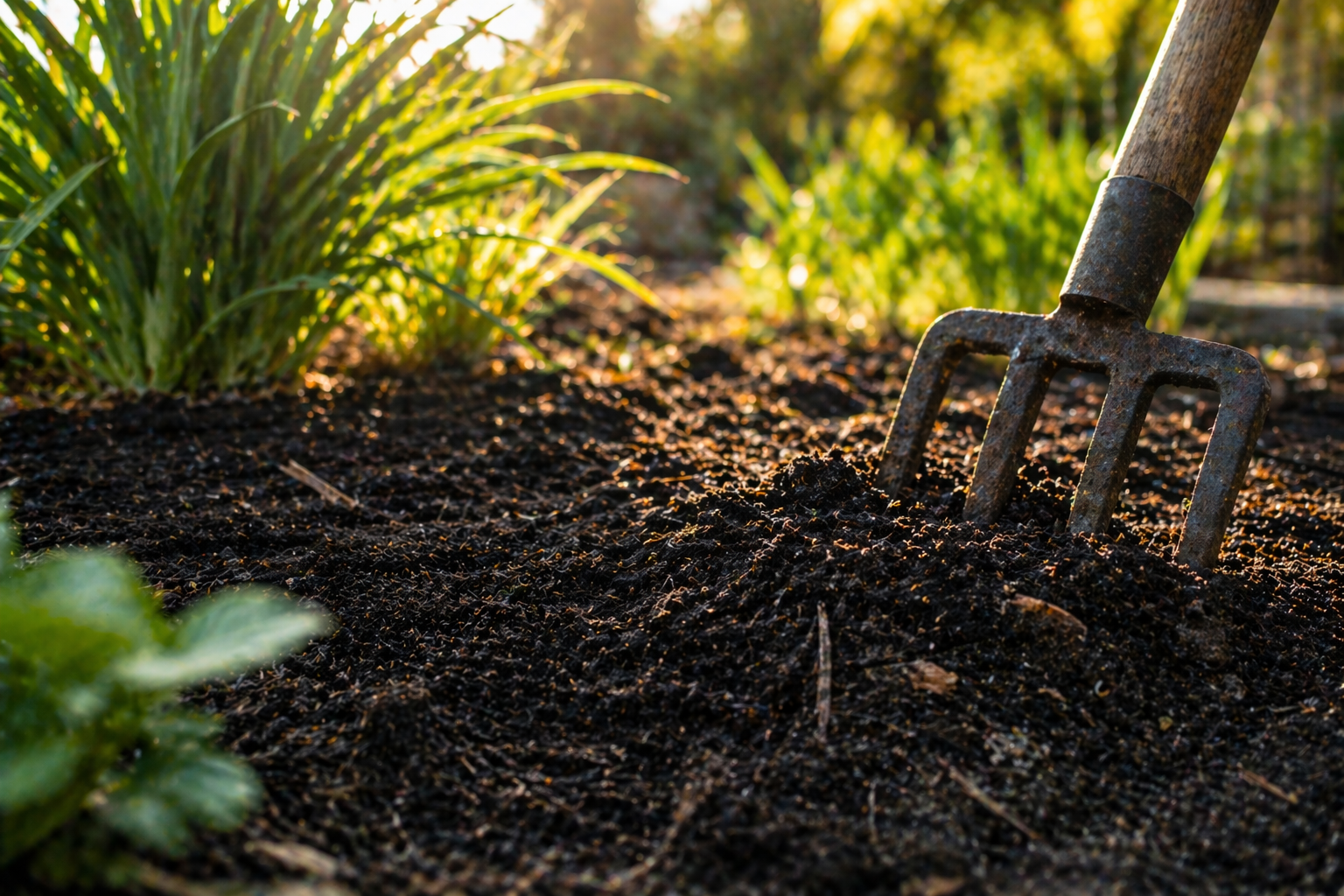
If your soil isn’t right…
nothing else will be.
You can plant the best plants.
Lay the best turf.
Spend money on landscaping.
But if the soil underneath isn’t doing its job
Everything struggles.
At Ground Control, this is one of the biggest issues we see across the Shoalhaven.
Gardens that look tired.
Lawns that won’t take off.
Plants that never quite thrive.
And more often than not…
It comes back to the soil.
The good news?
Winter is the best time of year to fix it.
Why Winter Is the Perfect Time to Improve Soil
Most people focus on what they can see in the garden.
Plants. Lawns. Landscaping.
But winter is when you focus on what’s underneath.
Here’s why it works so well:
Less Growth = More Control
Plants aren’t pushing growth in winter, so you can improve the soil without competing with active demand.
Better Moisture Retention
Cooler conditions mean the soil retains moisture longer, which is ideal for conditioning and improving structure.
Time to Prepare for Spring
Instead of reacting in spring…
You’re setting the foundation before growth kicks in.
What Healthy Soil Actually Looks Like
Good soil isn’t just “dirt.”
It should be:
Dark in colour
Loose and well-structured
Able to hold moisture without becoming waterlogged
Full of organic matter
If your soil is:
Hard and compacted
Sandy and dry
Clay-heavy and waterlogged
Then it needs work.
And that’s completely normal in the Shoalhaven; we see all of the above depending on location.
Step 1: Test and Understand Your Soil
Before you start throwing products at it…
Take a step back.
Ask:
Does water sit on top or drain too quickly?
Is it hard to dig into?
Do plants struggle to grow?
You don’t need complicated testing to get a basic understanding.
A simple look and feel can tell you a lot.
And if you’re unsure, this is where we can help. Give us a call on 02 44 111 062, and we can assess it properly for you.
Step 2: Add Organic Matter (This Is the Big One)
If there’s one thing that improves soil fast…
It’s organic matter.
This includes:
Compost
Aged manure
Mulch (especially organic mulch like sugarcane)
Organic matter helps:
Improve soil structure
Increase moisture retention
Feed beneficial microbes
In simple terms:
It brings your soil back to life.
Spread it across garden beds and lightly work it into the top layer.
Over time, this is what creates that rich, healthy soil every good garden needs.
Step 3: Fix Compaction
Compacted soil is one of the biggest problems we see.
It stops:
Water from penetrating
Roots from growing
Air from the circulating
Signs of compaction:
Water pooling
Hard, dry surface
Poor plant performance
To fix it:
Aerate the soil (by hand or machine)
Avoid heavy traffic over garden areas
Add organic matter to loosen it over time
For lawns, this step is critical.
If your lawn isn’t performing, there’s a good chance compaction is part of the issue.
Step 4: Improve Drainage (Especially in Clay Soils)
Some parts of the Shoalhaven have heavier clay soils.
That means:
Water sits longer
Roots struggle
Plants can rot if conditions stay too wet
Improving drainage can involve:
Adding gypsum (for clay soils)
Mixing in organic matter
Installing proper drainage solutions
This is where soil health and landscaping overlap.
Sometimes the fix isn’t just soil, it’s the structure.
If you’re dealing with drainage issues, it’s worth getting advice early. Give us a call, and we can walk you through the best option.
Step 5: Mulch Properly
Mulch is one of the simplest and most effective ways to improve soil health.
And winter is the perfect time to apply it.
Benefits of mulch:
Retains moisture
Regulates soil temperature
Reduces weeds
Breaks down over time to improve soil
Organic mulches like:
Sugarcane
Bark
Wood chips
Are ideal.
Apply a layer around 50–75mm thick across garden beds.
Simple job. Massive impact.
Step 6: Feed the Soil (Not Just the Plants)
A lot of people focus on feeding plants.
But the real focus should be:
Feeding the soil.
Healthy soil contains microorganisms that:
Break down organic matter
Release nutrients
Support plant growth
Using:
Compost
Organic fertilisers
Soil conditioners
Helps build a sustainable system, not just a short-term fix.
The Biggest Soil Mistake We See
Trying to fix everything in spring.
By then:
Plants are already growing
Problems are already showing
Fixes become reactive instead of proactive
Winter gives you the time to:
Do it properly
Build a strong base
Avoid problems later
What This Means for Your Garden
If you improve your soil now, you’ll notice:
Stronger plant growth in spring
Healthier lawns
Better water efficiency
Less maintenance long-term
Everything becomes easier when the foundation is right.
Need Help Getting Your Soil Right?
At Ground Control, we don’t just focus on what you see; we focus on what makes it work.
We help homeowners across the Shoalhaven:
Diagnose soil issues
Improve garden and lawn health
Set up landscapes that actually last
Whether it’s:
Soil improvement
Lawn recovery
Garden preparation
Or a full landscaping plan
We can help you get it sorted properly.
📞 Give us a call today on 02 44 111 062, and let’s talk about your soil and what it needs.
The Bottom Line
Your garden is only as good as the soil underneath it.
And winter?
It’s your best opportunity to get that right.
Less growth.
More control.
Better results later.
Do the work now… and let spring do the rest.
Thanks for reading Jason